Spider Web Crochet Coaster – Free Halloween Pattern
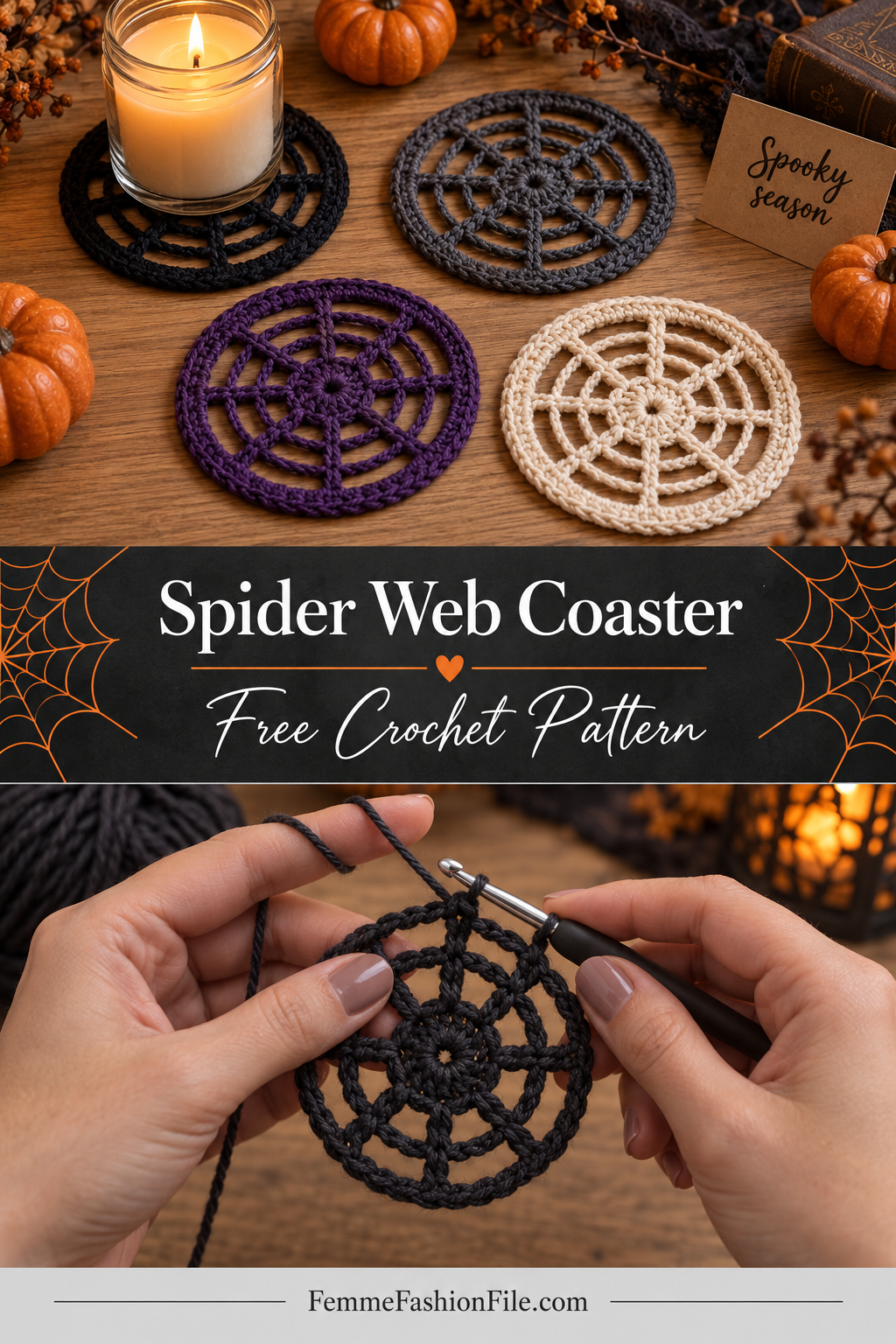
A spider web crochet coaster is the quickest way to make a Halloween table look deliberate. Put one under a candle jar, a bowl of sweets or a glass, and suddenly the whole setting has a theme. Each one takes about half an hour and uses a small amount of cotton.
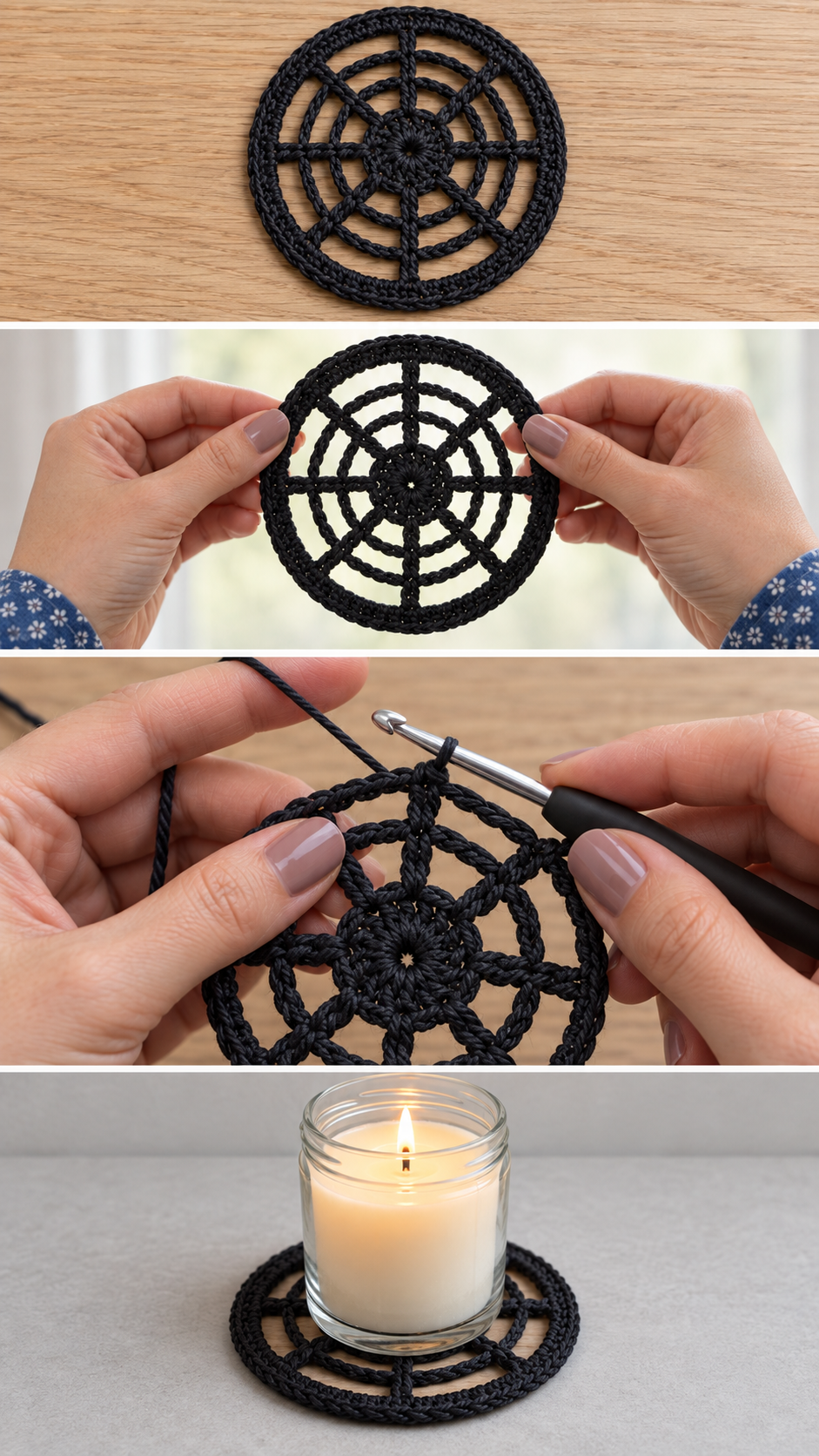
The web is built from eight spokes and rings of chain loops that grow a little wider every round, exactly how a real web grows outward from its centre. A solid rim of single crochet at the edge frames it and gives it enough body to lie flat.
You need a magic ring, single crochet, chains and slip stitches. It is also a very good introduction to working into chain spaces, which is the basis of lace and doilies.
Why this spider web works
The web has eight spokes because the first round has eight stitches, and every round after that places exactly one single crochet on top of each spoke. The chains between the spokes are what grow. Each round they are two chains longer than the round before — three, five, seven, nine — which widens the web by the right amount to keep it flat.
That makes the pattern self-checking in a new way. Instead of counting stitches, you count spokes. There should always be eight, and eight chain spaces between them. If you have seven or nine, you have skipped or doubled a space.
The honest trade-off: a web is open, so a coaster made this way will not soak up drips the way a solid cotton coaster does. It is perfect under candle jars, sweet bowls and dry glasses, and as decoration. For everyday drinks, the solid round coasters on this site are the better choice.
Materials you will need
- Yarn: about 20 yards of worsted weight cotton per coaster, in black, charcoal, purple or cream
- Hook: 4.0 mm (G-6)
- Notions: tapestry needle, scissors, and pins for blocking
Mercerised cotton shows the web lines especially crisply. A cream or white web on a dark wooden table looks striking, and a black web over an orange tablecloth is classic Halloween.
Finished size
About 4½″ across in worsted cotton on a 4.0 mm hook. Add a round of longer chains for a larger doily under a centrepiece.
Abbreviations
- MR = magic ring: a loop you work into, then pull closed.
- ch = chain: yarn over and pull through the loop on your hook.
- sc = single crochet: insert hook, yarn over and pull up a loop (2 loops), yarn over and pull through both.
- sl st = slip stitch: pull a loop through the stitch and the loop on your hook together.
- ch-3 sp, ch-5 sp = the space under a loop of three or five chains.
Pattern notes
- Worked in joined rounds with the right side facing. Do not turn.
- Every single crochet from Round 3 onward goes into a chain space, not a stitch.
- At the start of each round, slip stitch across into the first chain space so the new round begins in the right place.
- Count spokes, not stitches: always eight.
Step by step
Part 1: The centre
Round 1: Make a MR. Ch 1, work 8 sc into the ring. Pull tight and join with a sl st to the first sc. (8 sc)
Round 2: Ch 1, sc in the first st, ch 3, *sc in the next st, ch 3*; repeat 6 more times. Join to the first sc. (8 sc, 8 ch-3 spaces)
Part 2: The web
Round 3: Sl st into the first ch-3 sp. Ch 1, sc in the same sp, ch 5, *sc in the next ch-3 sp, ch 5*; repeat 6 more times. Join. (8 ch-5 spaces)
Round 4: Sl st into the first ch-5 sp. Ch 1, sc in the same sp, ch 7, *sc in the next ch-5 sp, ch 7*; repeat 6 more times. Join. (8 ch-7 spaces)
Round 5: Sl st into the first ch-7 sp. Ch 1, sc in the same sp, ch 9, *sc in the next ch-7 sp, ch 9*; repeat 6 more times. Join. (8 ch-9 spaces)
Check: lay it flat. The web should be a flat octagon with even gaps. If the centre bulges, your chains are too short for your tension; add one chain to each loop in the last round.
Part 3: The rim
Round 6: Sl st into the first ch-9 sp. Ch 1, work 9 sc into each ch-9 sp around. Join. (72 sc)
Round 7: Ch 1, sc in each st around. Join and fasten off. (72 sc)
The solid rim is what makes the web behave like a coaster. It pulls the outer loops into a circle and gives the whole thing enough weight to lie flat.
Part 4: Blocking
Lace always looks its best after blocking. Dampen the coaster, lay it on a towel, and pin the eight spokes out so they are straight and evenly spaced. Leave it to dry completely. It will keep that crisp web shape from then on.
Adding a spider
A tiny spider makes the web. Work 6 sc into a magic ring in black, then 6 more around, and close it into a small ball. Sew it near the centre and embroider eight short legs with black yarn, each one a straight stitch bent at the middle with a small tack. Or sit the amigurumi spider from this Halloween collection on top.
Other ways to use webs
A garland: make five or seven webs in cream and join them along a black chain for a window or a mantelpiece.
Appliqué: sew a web onto a tote bag, a cushion or the corner of a blanket.
A giant web: keep adding rounds, two chains longer each time, and finish with a rim. At twelve rounds you have a web large enough for a table centre under a pumpkin display.
Choosing colours
Contrast is what makes a web visible. Place a dark web on a light surface or a light web on a dark one. Black on orange, cream on dark wood and purple on black all work well. A web in the same tone as the table disappears.
Common mistakes and how to fix them
The web is ruffled
The chains are too long for your tension. Take one chain off each loop from Round 4 onward.
The centre cups upward
The chains are too short. Add one chain to each loop.
There are nine spokes
An extra sc crept into Round 1. Pull back and work exactly eight.
Finishing and care
Hand wash cool, pin flat to dry. Starched lightly, a web coaster holds its shape for years of Halloween tables.
Frequently asked
Can I use thinner cotton?
Yes. Fine cotton thread with a small steel hook makes a delicate lace web perfect for framing or for a card.
Is it safe under a candle?
Use it only under enclosed candle jars or LED candles, never under an open flame.
Laying a Halloween table
Spider web coasters shine on a dinner or party table. Put one under each place setting’s glass, and a large web of twelve rounds in the centre under a pumpkin or a cake stand. Scatter a few small crochet spiders across the table, and add LED candles in glass jars on the larger webs. The whole table comes together from one simple pattern repeated.
A black tablecloth with cream webs looks elegant and slightly gothic. An orange cloth with black webs is bright, cheerful and perfect for children’s parties.
Working into chain spaces
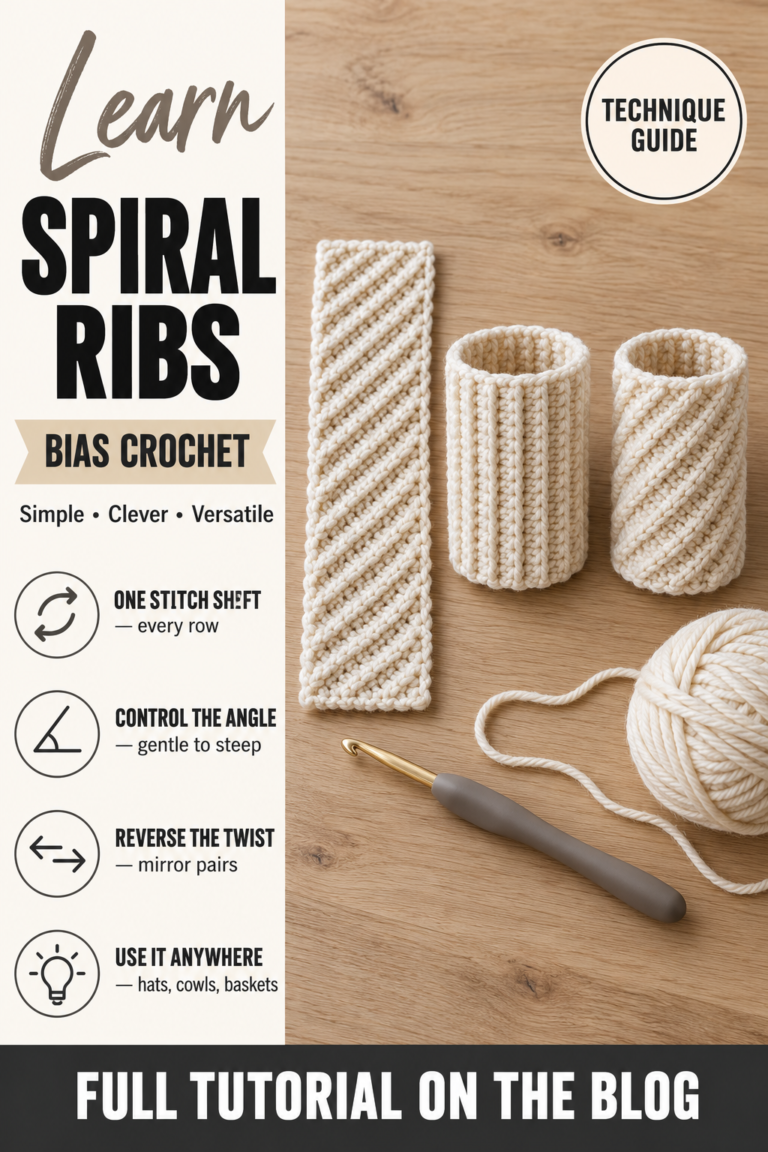
If this is your first time working into chain spaces, the key is to push your hook right under the whole loop of chains rather than into any single chain. That is what lets each spoke stack neatly on top of the one below. It feels loose at first, but it is exactly right. This one skill opens the door to doilies, mandalas and lace shawls, so a web coaster is a very good place to learn it.
A frame for a finished web
A web worked in fine cotton thread makes a beautiful piece of wall art. Block it very flat with a little starch, then lay it over black card inside a simple frame. It looks like a delicate piece of lace, and it can stay on the wall long after Halloween.
How long it takes
One web coaster takes about half an hour, including the rim. A set of four or six is an evening’s work, and blocking them all at once the next day takes only a few minutes. They are an ideal last-minute Halloween project when a party is only a day or two away.
Before you start
Count to eight on Round 1 and you are already halfway there. More spooky makes are in Halloween.